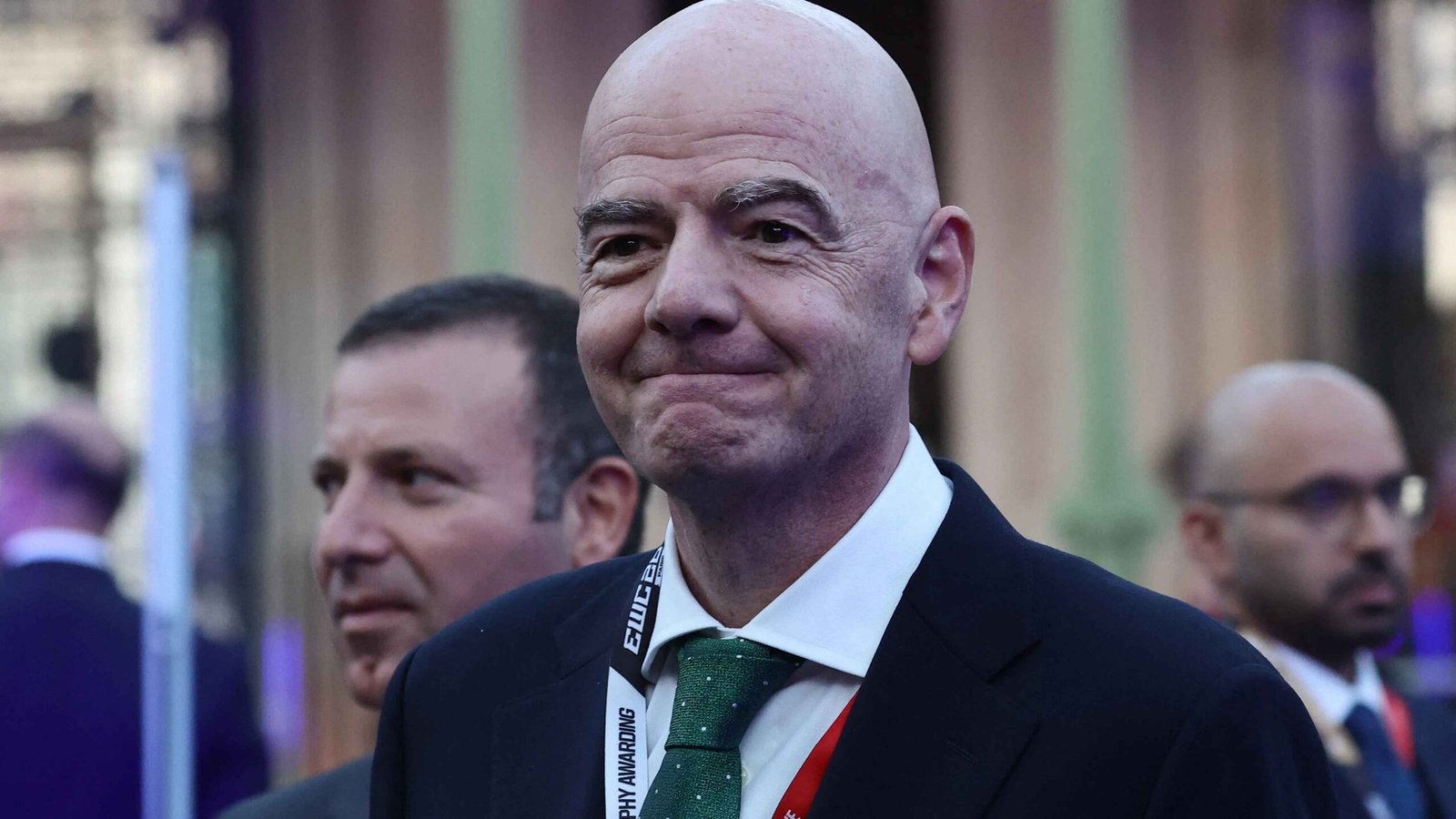
UEFA is seeking to broaden opposition to FIFA president Gianni Infantino by building a European alliance involving clubs and national associations, as tensions between the two governing bodies continue to increase.
The dispute intensified after Infantino was forced to abandon a plan to privatise the commercial rights to FIFA competitions following widespread opposition.
UEFA has called for Infantino to resign and has threatened to escalate its protests, including seeking a vote on a motion to remove him from office.
According to Spanish newspaper Marca, UEFA president Aleksander Ceferin will meet Nasser Al-Khelaifi, chairman of the European Club Association, on the sidelines of the UEFA Super Cup final in Salzburg on 12 August. The discussions are expected to focus on coordinating their positions towards FIFA and agreeing on the next stage of their dispute.
Reports have suggested that Ceferin is putting pressure on the European Club Association to consider a more confrontational response, including a boycott of the next edition of the FIFA Club World Cup. However, sources within the organisation said that option is not currently being considered.
They added that there is no agreement in place for the 2029 edition, meaning it would be premature to discuss a boycott at this stage.
Despite that, dissatisfaction among European clubs is growing. Clubs have yet to receive any financial compensation for their players’ participation in the 2025 FIFA Club World Cup, an issue that has now become a subject of discussion within the European Club Association.
UEFA also remains opposed to expanding the FIFA Club World Cup to 48 teams. It believes such a move would place further strain on an already congested fixture schedule.
Ceferin has previously criticised the growing number of competitions and warned publicly that the demands being placed on players and clubs are becoming excessive.
European clubs are also concerned that Infantino’s latest proposal went beyond the usual institutional framework. They believe it included arrangements affecting clubs’ rights and obligations, as well as those of their players, without proper consultation or a prior agreement.
Relations between FIFA and the European Club Association are governed by a memorandum of understanding covering such matters. That agreement runs until 2030, but does not include the 2029 FIFA Club World Cup.
UEFA’s response is not limited to the continent’s clubs. It is also working to align the positions of Europe’s national football associations.
All 55 UEFA member associations have rejected Infantino’s commercial model, but only four have gone further by formally withdrawing their support for his re-election as FIFA president.
The associations from England, Wales, Sweden and Serbia have taken that step, highlighting the growing divide within European football.
The planned meeting between Ceferin and Al-Khelaifi could therefore become an important moment in efforts to establish a united European position. UEFA has already made clear its opposition to FIFA’s commercial plans, while the clubs’ concerns over player workload, compensation and consultation are adding to the pressure on Infantino.