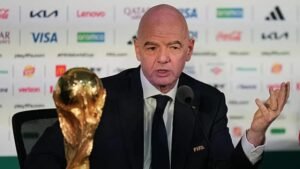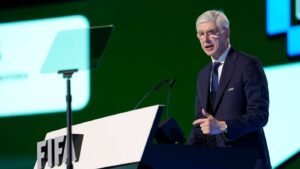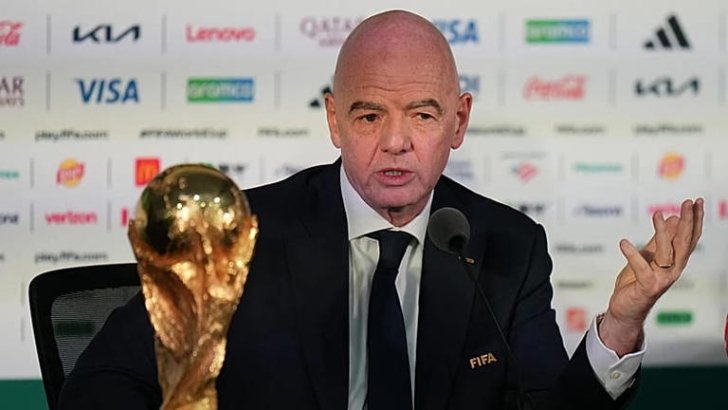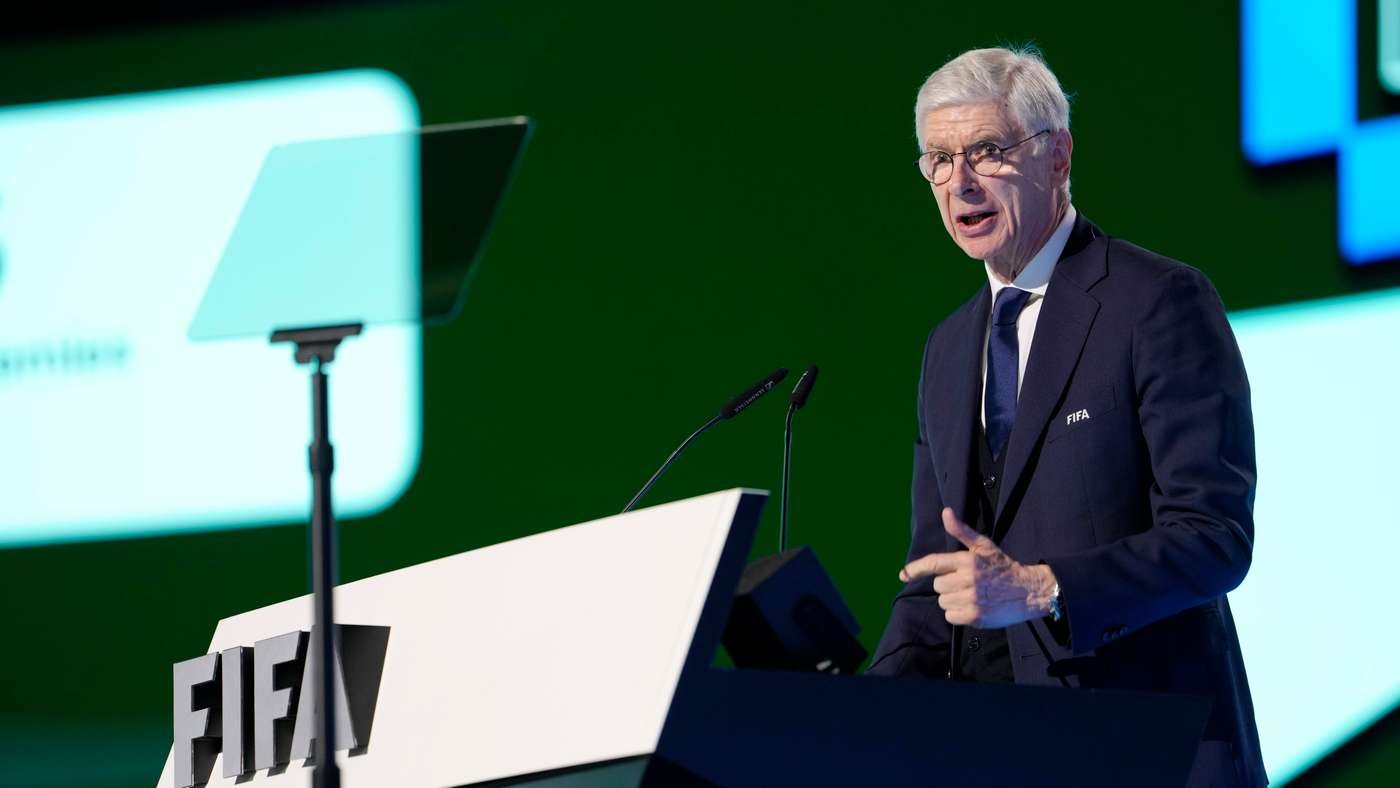
Aleksander Ceferin and Gianni Infantino are facing their latest and potentially most significant dispute over the future direction of world football, with UEFA’s 55 national associations unanimously threatening to boycott FIFA competitions if plans to involve private investors in the global game move forward.
The proposal, known as FIFA Forward Enterprise, could allow investors to acquire stakes in the commercial value of the World Cup. Ceferin, the president of UEFA, has rejected the project as a threat to the European model of football and as part of an attempt to turn the sport into a commodity.
The Slovenian lawyer began his career in sports law before becoming president of the Football Association of Slovenia. He was elected UEFA president in 2016, the same year Infantino became president of FIFA.
The pair had previously worked together at UEFA, but their relationship has gradually developed into a wider argument over the commercial direction and governance of international football, according to the Daily Mail.
The latest dispute follows several earlier disagreements. Ceferin strongly opposed FIFA’s handling of some issues surrounding the 2026 World Cup and criticised regulatory changes including mandatory water breaks. He also rejected plans to expand the World Cup to 64 teams, describing the proposal as “bad”.
Relations worsened over the expanded FIFA Club World Cup. UEFA viewed the competition as a potential threat to the Champions League, particularly as the football calendar became increasingly crowded and players faced heavier workloads.
Ceferin has repeatedly warned that adding more matches conflicts with the need to protect players. “The calendar is oversaturated… the players are overloaded and are getting injured,” he said.
The commercial disagreement between the two presidents also dates back several years. In 2018, Ceferin accused Infantino of “selling the soul of football”, adding: “Money does not rule… football is not for sale.”
In 2021, Ceferin led opposition to the proposed European Super League, a breakaway competition co-founded by major clubs including Real Madrid, Barcelona and Manchester United. He defended an open competition based on sporting merit and described the project as “a spit in the face of football fans and society as a whole”.
The relationship became even more strained at FIFA’s annual congress in May. Infantino arrived more than two hours late after accompanying Donald Trump on a diplomatic tour of the Middle East.
During the break, Ceferin led a number of European football representatives out of the congress. He accused Infantino of putting “personal political interests” ahead of the governance of football, an allegation rejected by the FIFA president.
Ceferin has presented himself as a defender of football’s independence from commercial and political interests, although his own career has also attracted controversy.
In 2017, a media investigation alleged that he had not met the experience requirements needed to become president of the Football Association of Slovenia. The claims did not prevent him from later rising to the UEFA presidency.
The dispute over FIFA Forward Enterprise therefore marks a new stage in the long-running rivalry between Ceferin and Infantino. Earlier clashes centred on individual competitions, regulations and the structure of international football. This time, the argument concerns a broader question: how the global game should be run and who should be entitled to benefit from its commercial value.