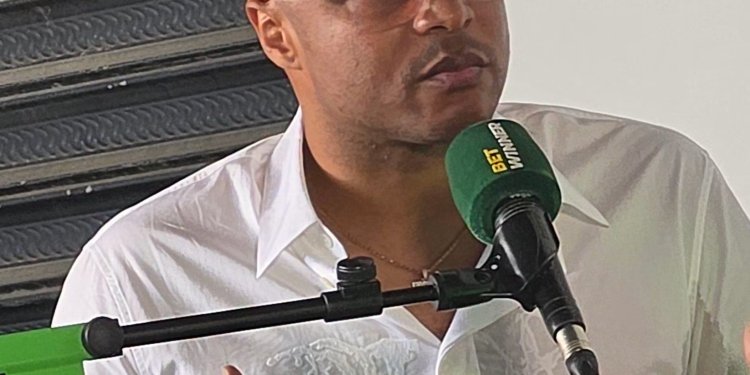
Football administrator Eric Alagidede has criticised FIFA’s proposal to allow private investors to buy stakes in a new commercial subsidiary, warning that the plan could make football less accessible to supporters.
The former Accra Great Olympics general manager said football should not be turned into a product that ordinary fans can no longer afford to watch.
“You cannot commercialise everything and make it so expensive for people to find it very difficult to watch the game that they love. How many people in the top echelons of our economists actually watch football?
“Very few come to Ghana and ask how many bank managers or top-level CEOs go to the stadium on Sundays. Very few of them. So I think we should not over-commercialise football.
“Truth also be told: when some of these monies arrive, they will end up not being used for the purposes for which they are meant for. So for me, I think it’s something we shouldn’t back. It’s something that would really take a lot away fromFIFA.
“And you saw how people were complaining about tickets at the at the at the last World Cup. The game is for the fans,” he added.
Alagidede was speaking to Luv FM after FIFA outlined plans to establish a commercial subsidiary, Fifa Forward Enterprise (FFE), to manage its major events, including the World Cups.
FIFA said outside investors would be invited to acquire minority, non-controlling stakes in the company. The proposal required approval from the governing body’s 211 member associations.
FIFA President Gianni Infantino wrote to the associations offering $40m (£30m) if they supported the proposal. A 19 September deadline was set for federations wishing to accept the plans and gain access to an initial $20m (£15m).
Infantino indicated that the proposal would require a simple majority to pass, meaning 106 of FIFA’s 211 members would need to vote in favour.
The plans prompted opposition from several football bodies. Uefa voted on Thursday to boycott World Cups if the proposal went ahead.
Concacaf, which hosted this year’s World Cup, also issued a statement rejecting Infantino’s plans several hours later.
Alagidede said the commercial focus risked moving the game further away from the people who attend matches and follow football around the world.
His comments also reflected wider concerns over the affordability of major tournaments, particularly after complaints about ticket prices at the most recent World Cup.
He questioned whether the additional money generated by the proposed investment model would necessarily be used for its intended purposes.
Following criticism from media organisations and member associations, FIFA subsequently scrapped the plan.