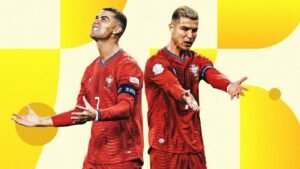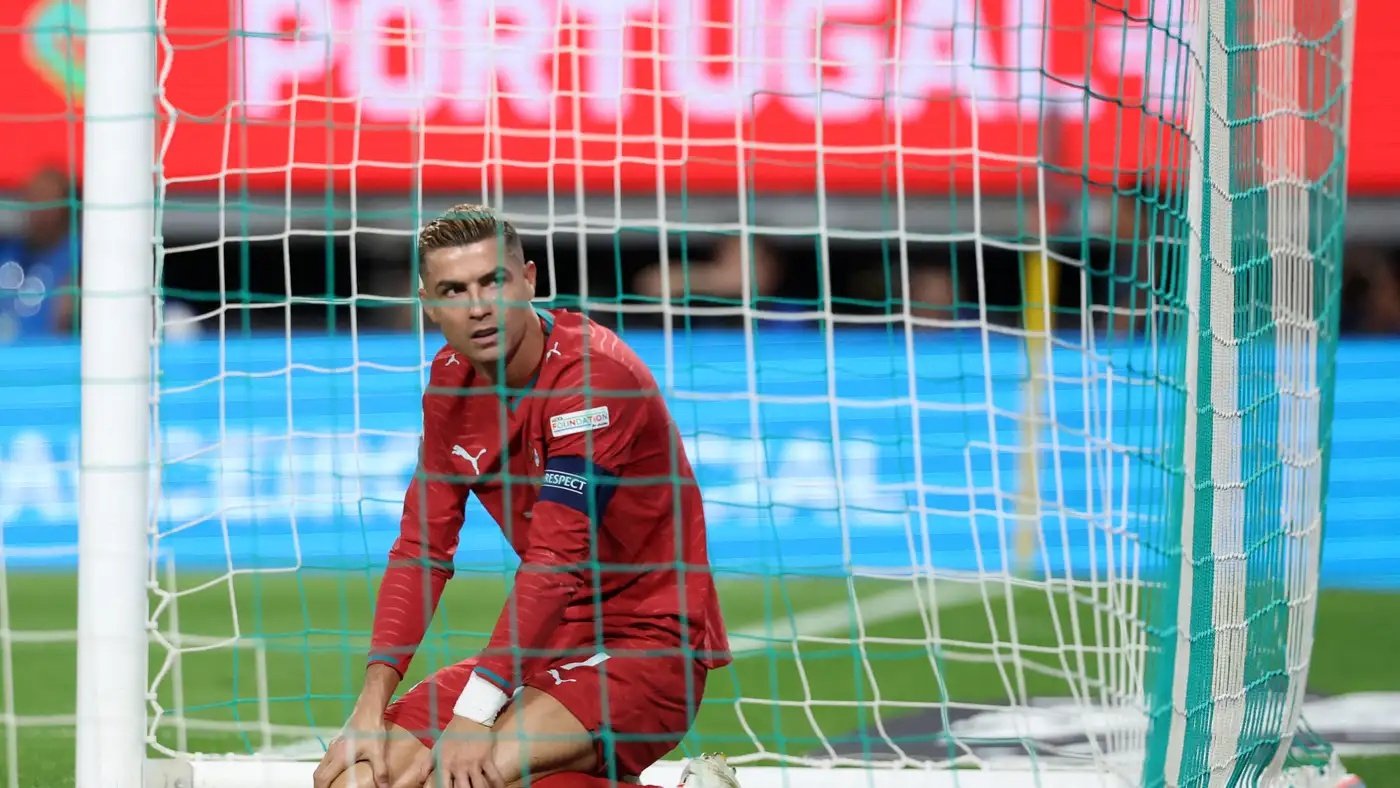
Cristiano Ronaldo has announced his international retirement after 23 years, bringing to an uneasy close the career of the Portugal icon who transformed his country’s expectations.
Unlike his old rival Leo Messi, who left Argentina less than a month ago to widespread applause, Ronaldo’s departure has been shaped by a dispute with coach Jorge Jesus. The disagreement was resolved with a 30-day suspension, already served, and a fine of 255 euros after Ronaldo left Portugal’s training camp without permission.
Jesus left him on the bench for one match and said he did not intend to start him in the next. Ronaldo responded by going home. His final appearance came against Wales on 24 September, leaving him with 146 international goals in 234 games.
Portugal has thanked him as a global ambassador and an inspiration to millions, while the federation has announced a special tribute. But the circumstances have denied supporters the celebration they wanted.
The 41-year-old might still have been selected for the next squad. Jesus said the door remained open and the decision belonged to Ronaldo. However, he was no longer guaranteed a starting place, something Ronaldo has historically found difficult to accept.
His reaction reflected an old pattern, but also overlooked the extent to which he changed. Since making his debut in 2003, he has clashed with coaches while developing strong bonds with managers and team-mates.
As a young player, Ronaldo arrived wearing his baseball cap backwards, huge sunglasses and headphones loud enough to be heard from afar. He even refused to remove the cap while eating with veterans Luis Figo and Rui Costa. Luiz Felipe Scolari publicly reprimanded him but privately predicted he could captain Portugal if he changed his attitude.
Ronaldo’s first major disappointment came in the Euro 2004 final at the Estadio da Luz. At 19, he watched Angelos Charisteas score the only goal as Greece stunned Portugal, with the teenager’s tears becoming one of the defining images of the tournament.
Figo wore number seven, leaving Ronaldo with 17, but helped him settle before departing the national team in 2006. In September 2005, Scolari and Figo told Ronaldo that his father had died before a qualifier in Russia. He rejected the offer to return home, played the match and asked team-mates to behave normally. He later called Scolari “father”.
His relationship with Carlos Queiroz deteriorated after the 2010 World Cup defeat by Spain, when Ronaldo told reporters to ask the coach to explain his performance. By then, his influence had become powerful enough to alter routines within the camp.
Sociologist Joao Nuno Coelho says Portugal’s national team represented both Portuguese identity and the country’s desire to be recognised internationally during years of economic hardship and low confidence. Ronaldo became the face of that ambition, although his individualism and ego also divided opinion. Some supporters preferred Luis Figo, Eusebio, Paulo Futre or Rui Costa, according to former international Jorge Andrade.
Success gradually softened those reservations. Under Fernando Santos at Euro 2016, Ronaldo accepted a centre-forward role alongside Nani and trusted his manager. After missing a penalty against Austria, he barely slept. In Marcoussis, he used a supporter’s megaphone to warn that Portugal had won nothing yet.
In the final against France, Ronaldo went off injured in tears. Nani took the armband, but Ronaldo encouraged the team at half-time and, before extra time, told Eder he would score. Eder did, securing Portugal’s first European Championship.
Ronaldo still stood in the technical area issuing instructions until the fourth official sent him back, an example of the determination that also made limits difficult for him to accept.
He later scored a hat-trick against Switzerland to send Portugal into the first Nations League final, which they won. In 2025, he lifted a second Nations League at an age when most players have retired.
No player has scored more goals for a national team or won more caps. With Ronaldo, Portugal evolved from a talented side into a team that expected to challenge at every tournament, while a generation of players learned his standards.
In 2018, he scored three times against Spain, including a free-kick after 45 attempts in major tournaments, but Portugal were eliminated by Uruguay. After a difficult 2026 World Cup, criticism focused on him continuing to start despite statistics showing it was his most productive period: under Roberto Martinez, he scored 28 goals in 37 matches, averaging 0.756 per game compared with 0.624 under Santos.
Portugal grew up with Ronaldo. For two decades, he took the country to places it had never reached before.