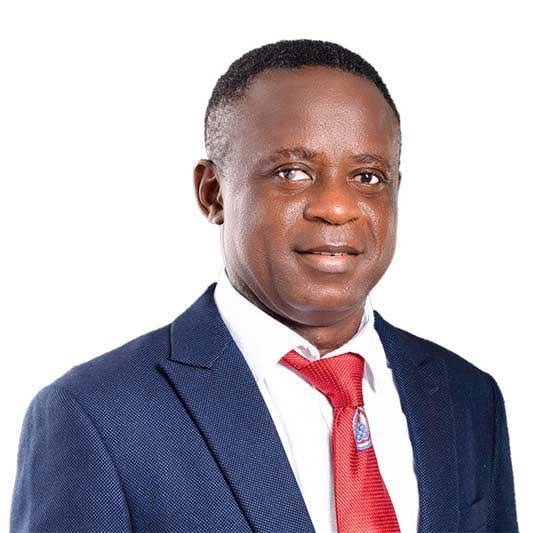
The National Sports Authority’s Acting Director-General, Prof. Emmanuel Osei Sarpong, says Ghana will not overcome its sporting difficulties simply by appointing top-level coaches, and must instead commit to long-term athlete development.
Sarpong’s comments come during a challenging period for Ghanaian football, with the country’s men’s and women’s national teams struggling to qualify for, and compete successfully in, major international tournaments.
Speaking to Citi Sports, he said a lack of sustained planning had allowed the underlying causes of Ghana’s decline to persist.
“Our problem with Ghana sports, not football alone, has been long-term planning, long-term development of athletes,” he said.
His assessment follows a series of disappointing results involving Ghana’s national teams.
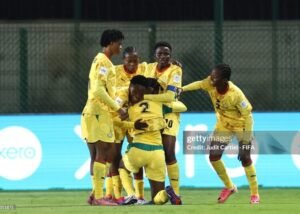
The Black Maidens are currently bottom of their group at the FIFA U-17 Women’s World Cup, having collected one point from their opening two matches. They are two points behind third-placed Canada and second-placed Norway, while group leaders Brazil are three points ahead.
Ghana must beat Canada in their final group fixture to retain any prospect of progressing to the next stage.
The men’s U-17 side, the Black Starlets, have also suffered a significant setback after failing to qualify for the U-17 Africa Cup of Nations (AFCON). That tournament also serves as the qualifying route for the 2027 FIFA U-17 World Cup.
At senior level, the Black Stars have lost their past two matches. They were beaten 2-0 by Cote d’Ivoire in Bouake before suffering a 4-2 defeat by The Gambia.
The results have led to increased calls for structural changes within the Ghana Football Association (GFA), as well as a comprehensive review of the country’s football development system.
Sarpong said Ghana also needed to invest in developing specialist coaching expertise rather than relying heavily on recruitment from outside the country.
“As we speak now, there is no Ghanaian who is qualified as a fitness trainer, strength and conditioning coach, specifically for football,” he added.
“Why can’t you use that money to develop some coaches in Ghana so that they will become multipliers of their knowledge?”
He called for closer co-operation between the NSA, the Ghana Olympic Committee (GOC) and the country’s sports federations to establish a more organised talent-identification structure.
Sarpong described the creation of the Grassroots Sports Secretariat as an important initial step towards building a sustainable pathway for athletes.
He said identifying talent would only be effective if it was supported by regular funding and properly structured training programmes.
His proposed model would see promising athletes identified at the age of 12 and developed through a six-year programme, with the aim of preparing them for world-class competition by the time they reach 18.