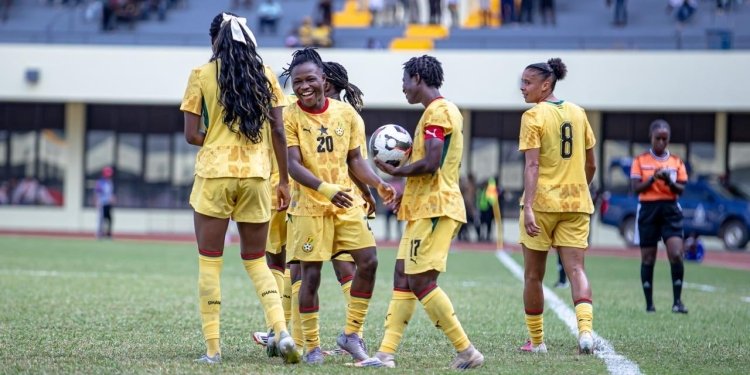
Ghana will have another opportunity to qualify for the FIFA Women’s World Cup 2027 after beating Cote d’Ivoire 2-1 in the African play-offs.
The Black Queens missed out on automatic qualification when they lost 2-1 to Malawi in the quarter-finals of the 2026 CAF Women’s Africa Cup of Nations in August.
They will now compete in the preliminary phase of the Play-Off Tournament from 28 November to 5 December, facing Ecuador, Uzbekistan and Papua New Guinea. Only two of the six participating teams will progress to the final play-off stage, which will take place in February and March 2027.
Ghana coach Kim Lars Bjorkegren believes his side can take advantage of the opportunity as they attempt to reach the World Cup for the first time since 2007.
“It was like a second chance for us,” Bjorkegren told FIFA. “Unfortunately, we didn’t manage to qualify directly through the WAFCON, so we see this tournament as a great opportunity to make up for it.
“That’s the target. We know it won’t be easy, but we believe in ourselves and know we are a difficult team to beat. If we can score when the opportunities come, I think we have a good chance.”
Bjorkegren, who took charge of Ghana in January 2025, guided the Black Queens to third place at the 2024 Africa Cup of Nations, held in 2025. He has also served as interim coach of the men’s national team since November.
The Swede praised his players’ response after the disappointment of losing in the WAFCON quarter-finals. Ghana had to manage injuries and fatigue before recovering to defeat Cote d’Ivoire.
“The mentality is really, really strong,” he said. “When you think they are ready to give up, they always push a little bit more. Our goal was to go further at WAFCON, but we didn’t. In the end, we found the energy, the girls really showed up and we took the opportunity to stay in the qualification.”
Ghana will begin the tournament against Ecuador, whom Bjorkegren regards as a strong and dangerous opponent. He admitted his coaching staff have less information about Uzbekistan and Papua New Guinea, but said playing them later would allow Ghana to study them after their opening matches.
Bjorkegren expects his team to remain adaptable, although a 4-3-3 formation is often used. He wants Ghana to press high, attack on the counter and give creative players freedom in the final third, while retaining a well-organised defence in which every player understands their role.
Qualifying would have significance beyond the pitch, he said, pointing to the increased interest in the women’s team after Ghana won the WAFCON bronze medal. He recalled seeing a father buy football boots for his daughter and said such moments showed that people were beginning to recognise the team’s achievements.
Ghana’s coach is also motivated by the prospect of competing in Brazil.
“Playing in Brazil feels a little bit like football is coming home,” said Bjorkegren, who recalled watching the men’s team at the 1990 tournament in Italy when he was nine. “To be part of that would be fantastic. It will not be easy, but we will do our best.”