No Ghanaian should be refused employment, school admission or healthcare because they are living with HIV, the Ghana AIDS Commission (GAC) has said.
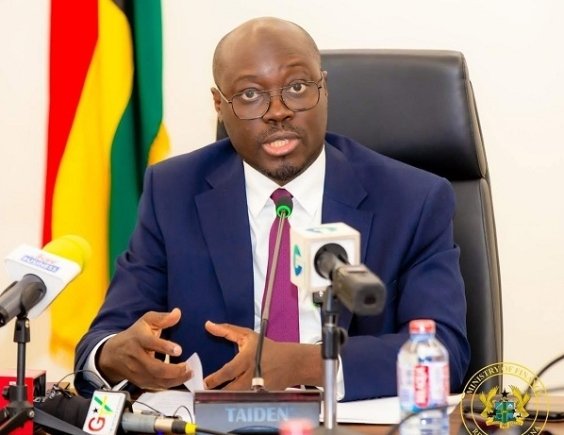
Kakra Essamuah, chairperson of the commission’s Governing Board, warned institutions that require prospective employees to take HIV tests that they could face the full rigours of the law.
Ghanaian law does not permit such testing as a condition of employment, he said, describing the practice as “shameful and regrettable”.
Mr Essamuah said denying opportunities on the basis of HIV status amounted to discrimination and stigmatisation, which the GAC had consistently sought to combat. HIV, he added, was not a disability that prevented people from working in any environment.
“Stigmatisation and discrimination have no place in a nation that prides itself on compassion and dignity,” he said, adding that ending the practice was a shared responsibility.
He was speaking at the 15th National HIV and AIDS Partnership Forum, organised by the GAC yesterday.
The annual forum is the commission’s main platform for coordination and mutual accountability. It reviews progress towards national targets, reports on commitments made at the previous meeting and identifies priority actions for the year ahead.
This year’s event marked 40 years of Ghana’s HIV response and was held under the theme: “40 years of HIV Response in Ghana: Celebrating Partnerships, Transforming Lives, Sustaining the Future.”
It brought together communities involved in the HIV response, development partners, faith-based organisations, academics and representatives of Society for AIDS in Africa (SAA).
Progress and priorities
Reflecting on Ghana’s four-decade response, Mr Essamuah said HIV had initially been associated with fear, silence and limited treatment options.
The situation had since changed, he said, with People Living With HIV (PLWHIV) able to access life-saving treatment, raise families, develop careers and contribute fully to national development.
“That transformation did not happen by chance,” he said. “It is the result of political will, the courage of PLWHIV, the dedication of health workers and communities, and the solidarity of our international partners. It is a story that every Ghanaian can be proud of.”
He said much of the response had been financed through cooperation between the government and international partners. A sharp fall in external support last year, however, showed that sustaining HIV programmes was no longer simply a technical issue, but one of national ownership, sovereignty and leadership.
GAC Director General Dr Kharmacelle Prosper Akanbong said the commission had established a youth desk, developed and validated the National HIV and TB Human Rights Strategic Plan 2026 to 2030, created new interventions for people who use drugs and developed a community-level HIV data system integrated into routine health information systems.
He said progress had been slower in expanding local production of HIV commodities and increasing government funding for the domestic HIV response, which would remain priorities in the coming year.
Although new HIV infections had declined nationally, Dr Akanbong said those aged 15-24 accounted for about 30 per cent of new infections.
“This is very worrisome, and we need to take specific actions on that,” he said.
United Nations Resident Coordinator Zia Choudhury said the UN family remained committed to helping Ghana achieve full sovereignty in financing its healthcare.
Chief Director at the Office of the President Dr Alhaji Abubakari Wayo said successive governments had contributed to Ghana’s HIV response, but no government, institution or development partner could end HIV and AIDS alone.
Other speakers included Dr Emmanuel Teviu, Luc Armand Bodea and Torgbe Paul Alossode.