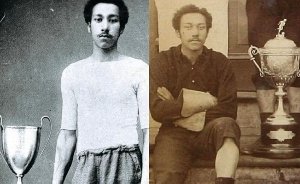
Ghanaian-born Arthur Wharton, widely recognised as the world’s first Black professional footballer, is being remembered 161 years after his birth for challenging racial barriers in English football and achieving success in athletics.
Wharton was born on October 28, 1865, in Jamestown, Accra. His father was Grenadian-Scottish and his mother was Ghanaian.
He moved to England in 1883 and began a sporting career at a time when opportunities for Black athletes were severely limited. His achievements in football and athletics later established him as one of the most significant sporting pioneers of his era.
In 1889, Wharton signed for Rotherham Town, making history as one of the earliest Black players to play professional football in England. His career came during a period when racial barriers were deeply entrenched in the sport.
Wharton’s sporting ability extended beyond football. On July 3, 1886, he reportedly completed the 100-yard sprint in 10 seconds at Stamford Bridge in London. The performance remained a record for more than 30 years.
He later joined Sheffield United and, in 1895, became the first Black player to appear in England’s First Division. His progress through the English game represented an important milestone for Black footballers, who faced significant obstacles during the late 19th century.
Wharton’s life after his sporting career was difficult financially. He died on December 12, 1930, aged 65.
Recognition of his contribution came many years after his death, as efforts grew to acknowledge the role of Black pioneers in the history of football. In 1997, Wharton was inducted into the English Football Hall of Fame.
A further tribute followed in 2014, when a statue honouring him was unveiled at the headquarters of the Football Association in England.
Wharton’s story continues to form part of Ghana’s sporting history. As the country marks the 161st anniversary of his birth, his legacy highlights both Ghana’s contribution to international sport and the barriers overcome by early Black athletes.
His career also provides an early example of a Black player breaking into English professional football, decades before greater recognition and opportunity became available to Black players in the game.