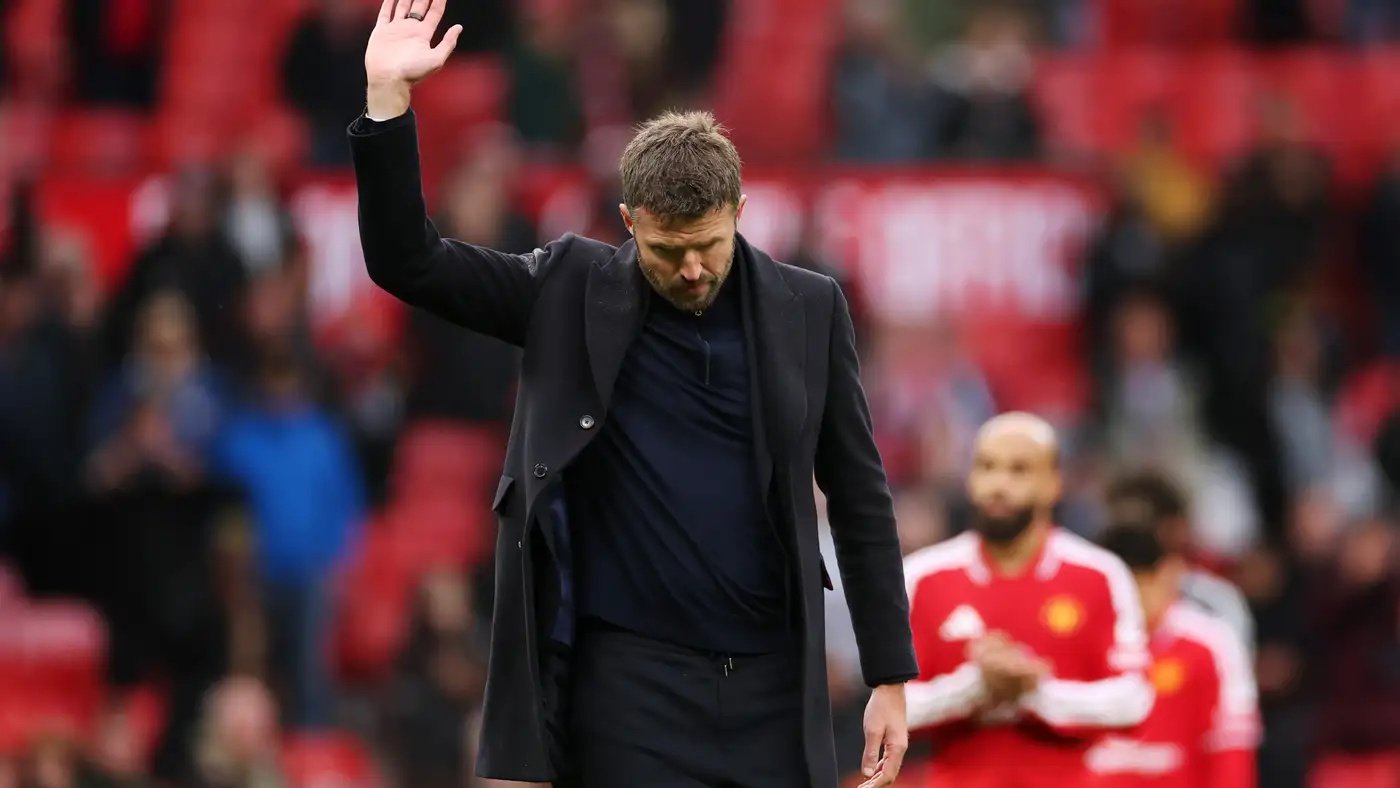
Michael Carrick’s position as Manchester United manager is under serious scrutiny, with the club expected to make a decision during the November international break after the team’s next two matches.
Carrick is due to lead United against Chelsea on 31 October 2026 and is also expected to remain in charge for the following fixture against Aston Villa. The international break, which begins on 9 November after the Villa match, has been identified as the point at which the club will decide whether he stays or leaves.
Sources inside Manchester United told TEAMtalk that senior figures have already established a final timetable for determining Carrick’s future. The club had initially planned to use the November break to assess his position, but a sharp decline in performances and results has prompted the process to accelerate.
Senior figures hold Carrick talks
A significant meeting took place at the club’s Carrington training ground on Monday to discuss the deteriorating situation. Sporting director Jason Wilcox led the talks, with chief executive Omar Berrada and head of recruitment Christopher Vivell also present.
Co-owner Sir Jim Ratcliffe joined the meeting by video, as the club considered its options and reviewed the work already carried out on possible successors should a change be made.
Eddie Howe, the former Newcastle United manager, is understood to be Wilcox’s preferred candidate and the leading option at present. Sources said the financial compensation required to appoint Howe would not prevent Manchester United from proceeding if the club decided to make the change.
Vivell is strongly supporting the appointment of German coach Julian Nagelsmann. Antonio Conte has also been considered within the club, with Manchester United recognising the potential benefits of appointing the Italian.
Why Carrick remains in charge
Despite the growing uncertainty, United have decided not to dismiss Carrick before the Chelsea match. He is also likely to take charge against Aston Villa, giving him two final opportunities to produce a positive response.
The club’s reluctance to make an immediate change is based on two main factors. Manchester United want to avoid relying on an interim manager for an extended period and are keen not to enter into a short-term arrangement.
Wilcox is also said to have strong personal support for Carrick. He played a central role in his appointment and wants him to succeed and establish himself as a long-term solution.
That backing, however, cannot outweigh the demands of the role indefinitely. Sources stressed that Carrick’s continued support does not guarantee his position beyond the next two matches.
His future remains the subject of intense debate, with results and performances now regarded as decisive. Although he has been given one final chance to improve the team’s fortunes, a change is currently considered the most likely outcome.
If there is no significant improvement against Chelsea and Aston Villa, the November international break would provide Manchester United with the opportunity to appoint a permanent successor.